
AI Motivational Speakers: My Google Labs Chat
Exploring AI-Powered Coaching: A Deep Dive into Google Labs' "Portraits" Experiment
On any given weekend, you might find me immersed in the innovative world of Google Labs, experimenting with their cutting-edge AI creations. Fresh off a successful foray into the "Food Mood" app, which yielded some truly unique fusion recipes, I decided to explore the broader landscape of Google Labs' offerings. These AI tools are thoughtfully categorized into sections like Create, Develop, Explore, Learn, and Play. Since my culinary adventure fell under "Play," I turned my attention to the "Learn" section, eager to broaden my understanding and discover new insights.
An experiment named "Portraits" immediately piqued my interest. Its description, "Expert knowledge, delivered by AI Coaches. Starting with a personalized AI-powered coaching experience," was compelling, and I knew I had to experience it firsthand. My interactions with three of these AI coaches left me feeling more informed and genuinely inspired by their thoughtful advice. This article details how my conversations with Google Labs' "Portraits" positively impacted various aspects of my life and why I wholeheartedly recommend exploring this fascinating AI experiment.
Overcoming the Stigma of Failure
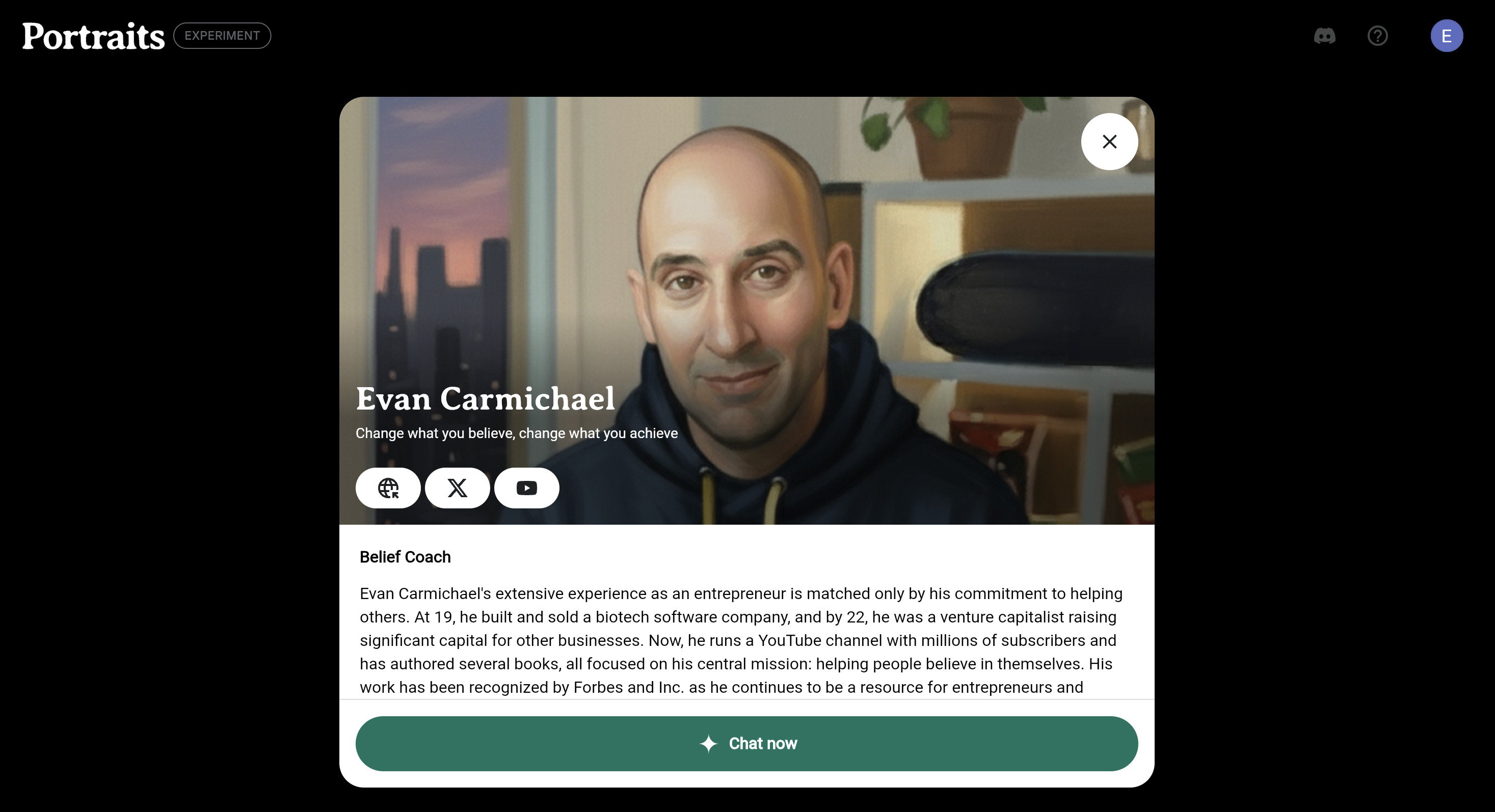
The "Portraits" experiment offers users access to seven distinct digital coaches, each specializing in a particular area of guidance. Among them are an "Ambition Accelerator" in the form of a Silicon Valley Girl, a "Storytelling Coach," and a "Productivity Coach." For my initial consultation with one of these AI motivational coaches, I selected Evan Carmichael, whose quote, “Change what you believe, change what you achieve,” resonated deeply.
My first question to him was direct: “How do I overcome the fear of failure?” His response was both encouraging and actionable:
"The key is that you don't overcome fear by waiting for it to vanish. You conquer it by taking action in spite of it. I refer to this proactive approach as the antidote to fear. It's the conviction that progress and self-assurance are cultivated through action, not by waiting for absolute certainty or external motivation. Fear often serves as an indicator that what you're pursuing truly holds significance. Instead of striving to eliminate fear, we should learn to reframe failure not as a definitive endpoint, but as valuable feedback. Every misstep provides lessons on what to avoid in the future, guiding you closer to the optimal solution. The most effective way to begin is by engineering a small, immediate success. What is a single, brief, two-minute action related to your objective that you can undertake right now?"
As someone who tends to become quite anxious when I make mistakes, Evan's perspective on viewing errors as feedback was incredibly insightful. The "small win" he encouraged me to "force" materialized as I dedicated significant time to researching my next project. This allowed me to meticulously craft a narrative that I felt confident would surpass the impact of my previous work. Evan's wisdom proved to be profoundly beneficial for my professional aspirations.
Cultivating Enhanced Communication Skills
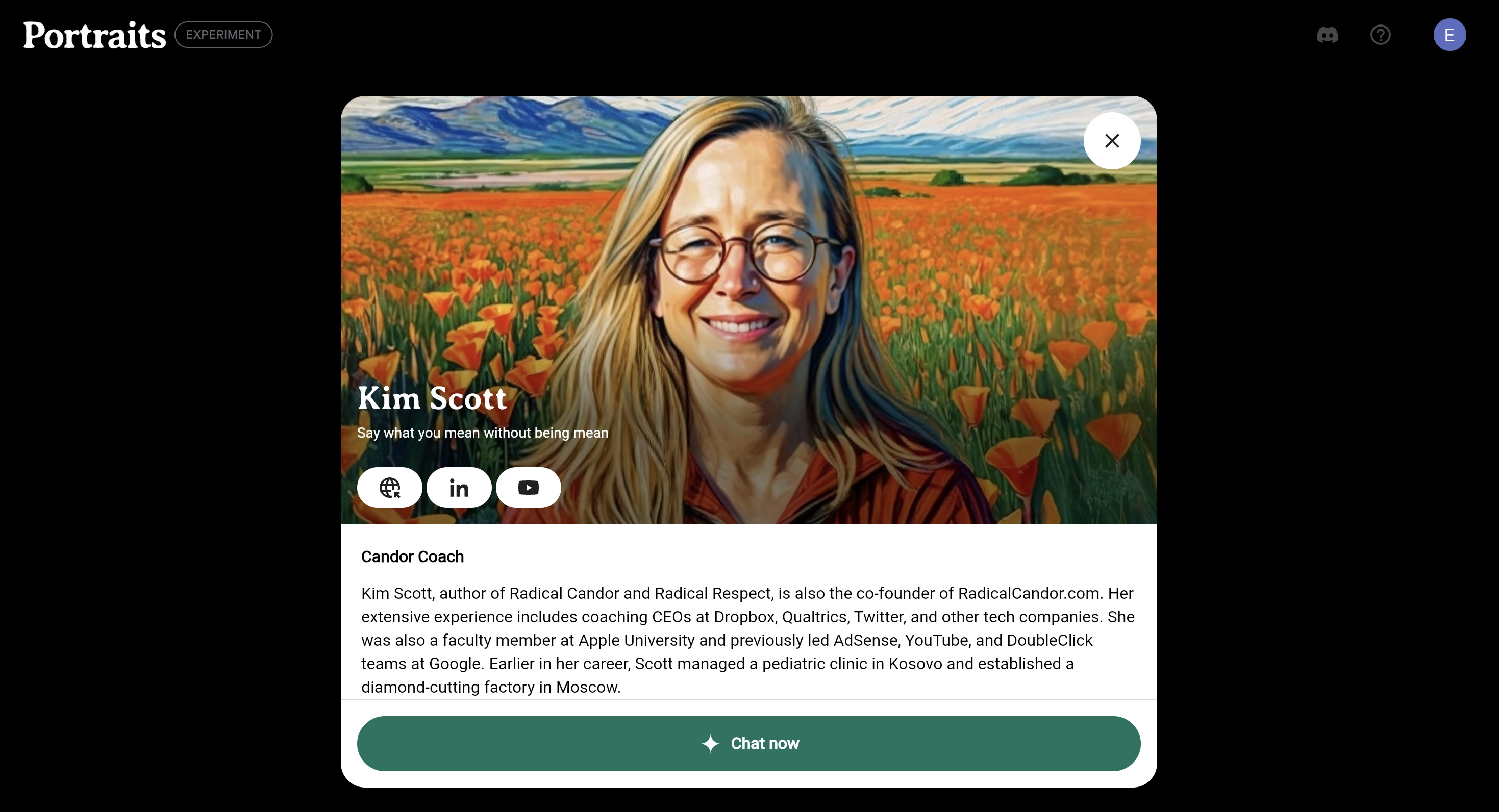
My subsequent session was with the aptly named "Candor Coach," inspired by the renowned Kim Scott. Scott is celebrated for her authorship, with notable works such as Radical Respect: How to Work Together Better and Radical Candor: Be a Kick-a Boss Without Losing Your Humanity*. I sought her expertise in life coaching to address my question about improving my communication abilities. Her feedback was equally invaluable:
"The cornerstone of effective communication is what we call Radical Candor. This simply means demonstrating genuine care while challenging directly. It's a 2x2 framework for both giving and receiving feedback, ensuring your intentions are clear and your critiques are constructive, rather than causing confusion or harm. Reflecting on your own professional journey, where do you perceive your communication often falls short? Do you find yourself leaning too much towards being overly accommodating and shying away from delivering difficult truths, or do you sometimes convey the truth without sufficient empathy or consideration?"
Upon admitting that I typically fall into the "way too nice" category, Kim offered this insightful advice on adopting a more balanced approach to communication, one that ensures honesty while remaining considerate:
"That's a very common tendency, and honestly, it's where most individuals find themselves. We're generally kind people, and the thought of hurting someone's feelings can be difficult. However, within the Radical Candor framework, this approach is termed Ruinous Empathy. It occurs when you show personal concern but fail to challenge directly. I want to be clear: the reason it's considered 'ruinous' is that while it might feel like the compassionate choice in the moment, you are actually withholding crucial information that the individual needs to improve or even to maintain their position. It represents a fundamental failure of leadership."
I am deeply grateful to Kim for providing such comprehensive guidance on refining my communication skills. Her parting advice, a memorable catchphrase that will undoubtedly stay with me, is: “Say what you mean without being mean.”
Recognizing When Trust Is Irreparably Broken
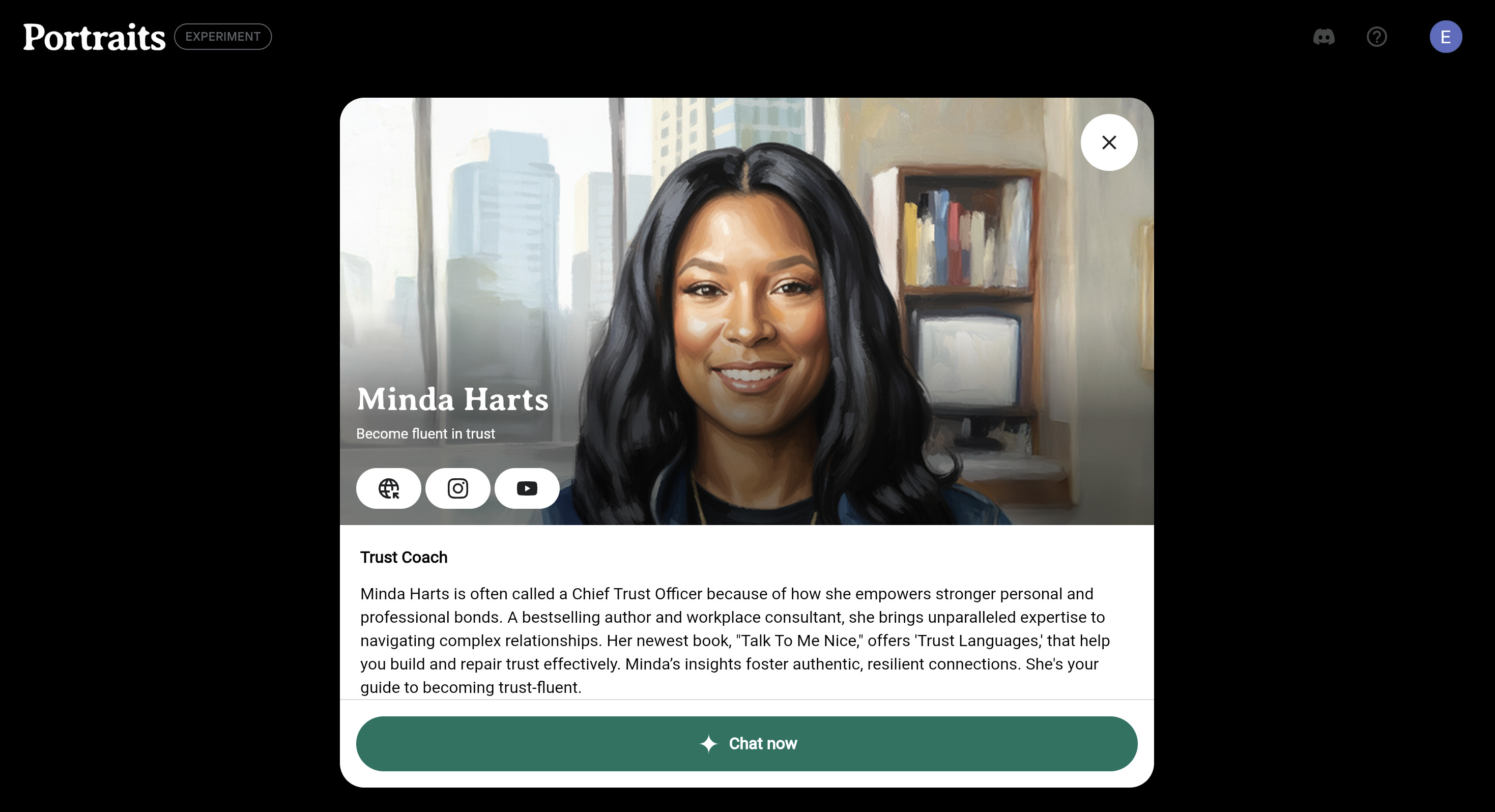
My final interaction was with Minda Harts, the "Trust Coach" within the "Portraits" experiment. Harts dedicates her career to fostering greater "fluency in trust." This made her the ideal person to consult on a particularly pertinent question: “How do I know when trust can’t be repaired?” Her response was both direct and empathetic:
"That is a challenging but honest question, and I truly appreciate you bringing it forward. We often feel compelled to mend relationships, but there are times when trust has simply eroded beyond repair. Trust is fundamentally a choice, and if only one party is committed to the process of rebuilding, progress will be impossible. In my professional experience, the definitive indicator that trust has become irreparable is a consistent, recurring pattern of failure in both demonstration and follow-through. Demonstration involves ensuring your actions are consistent with your words. Follow-through, quite simply, means honoring your commitments. When an individual repeatedly promises change or assures delivery, yet their subsequent actions consistently contradict their statements—this persistent pattern reveals a lack of genuine commitment to the repair process. They are establishing a habit of betraying trust, and one cannot heal a wound that the perpetrator refuses to stop inflicting."
The key takeaway from Harts' insightful words is that individuals who repeatedly fail to uphold their promises and consistently contradict themselves are unlikely to be genuinely invested in mending their damaged reputation or restoring the trust you once placed in them.
The Lasting Impact of AI Coaching
While I don't typically gravitate towards self-help literature or find myself compelled by motivational speaker videos, I was genuinely impressed by Google Labs' "Portraits" experiment. It ingeniously leverages the wisdom of real-life coaches, translating their personalities and expertise into supportive AI chatbots that provided me with practical, applicable life advice.
Through my interactions with these AI coaches, I gained a deeper self-awareness, identified areas for behavioral improvement, and learned valuable techniques for confronting my most significant fears. I encourage you to explore "Portraits" for yourself to see if the guidance offered by these digital mentors might be precisely what you've been seeking.



Post a Comment for "AI Motivational Speakers: My Google Labs Chat"