
Jake Canter: Olympic Mindset, Creative Comebacks
Jake Canter’s Olympic Bronze: A Testament to Resilience and Redefining Limits
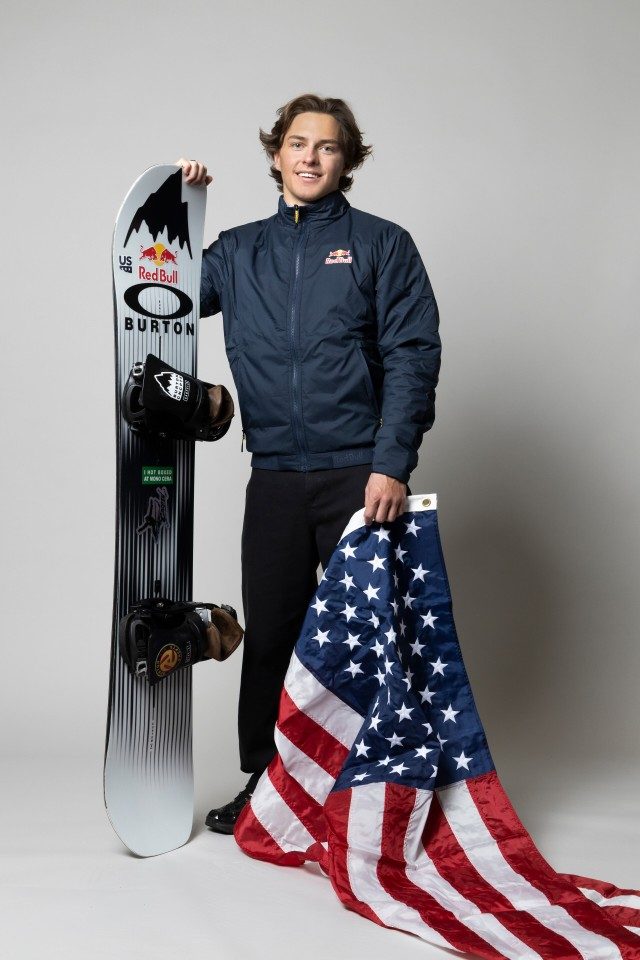
The roar of the crowd, the crisp mountain air, and the sheer pressure of an Olympic final – for Jake Canter, this was the stage for a near-perfect performance that would ultimately secure him a Bronze Medal in slopestyle snowboarding. Standing at the top of the Milano Cortina course, Canter surveyed the daunting terrain with an almost surgical focus. With a decisive clap of his hands, he launched into his third and final run, a performance that demanded nothing short of excellence.
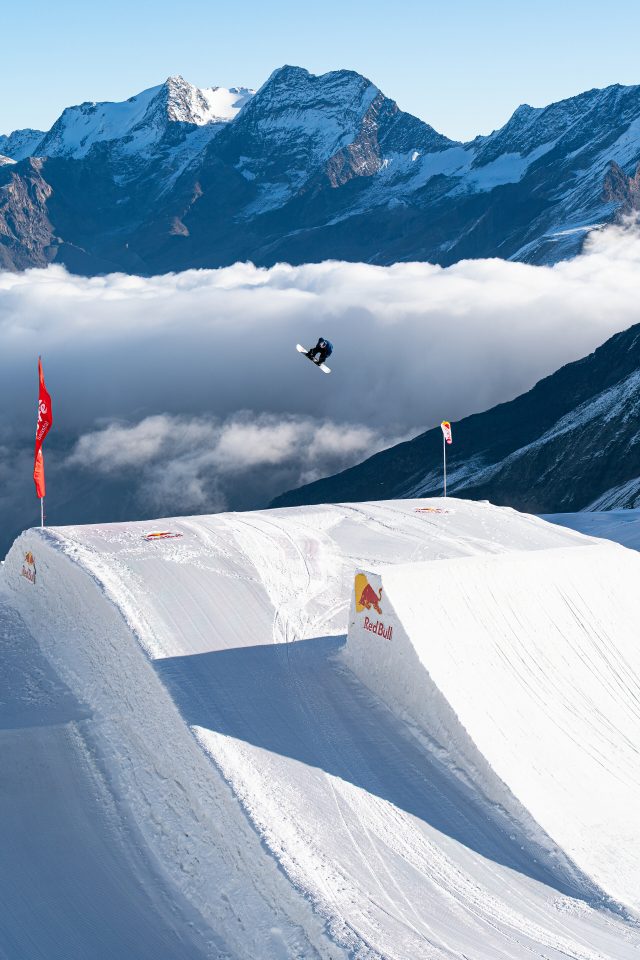
His run was a masterclass in precision and aerial prowess. He flawlessly executed boardslides, a daring double underflip off a cannon, and a series of increasingly complex spins. Among these were the switch BS 1620 melon (4.5 rotations), a BS 1800 nose (5 rotations), and culminating in a breathtaking BS 1980 (5.5 rotations). With each successfully landed trick, the tension mounted, a palpable wave of anticipation building with every spin and flip.
As he approached the final jump, Canter tucked, maximizing his speed, his front hand grazing his leading ankle. Then, with explosive power at the lip, he launched himself into the air, rotating with a helicopter-like intensity. He completed the full 1980 degrees of rotation before landing cleanly on his toe edge, sticking the landing with admirable control. He had done it. The result: a score of 79.8, earning him a spot on the podium alongside the world’s elite riders.
But this triumphant moment was the culmination of a journey marked by extraordinary adversity. Canter’s path to the Olympics was anything but smooth. Growing up in Colorado, a severe traumatic brain injury at the age of 13, which involved four skull fractures and left him in a coma for four days, could have ended his athletic aspirations. Yet, his challenges didn't end there. Just four months later, he contracted bacterial meningitis, plunging him back into a coma for another six days and resulting in the permanent loss of hearing in his right ear. Doctors gave him a mere 20% chance of survival. Against all odds, he not only survived but emerged with an indomitable spirit.
In an exclusive conversation, Canter shared insights into his remarkable resilience, his perspective on freedom in sport, and his rigorous training regimen, including his work at the Red Bull Athlete Performance Center (APC) in Los Angeles.
From Early Days to Olympic Aspirations
The Manual: Can you recall your first experience snowboarding? What was that initial feeling, or was there a specific moment that sparked your passion?
Jake Canter: I believe I first tried snowboarding around age six, on Christmas. I rented a board and took a lesson. The instructor was quite restrictive, which was challenging since I had a background in skateboarding. I remember being on flat ground, spinning in circles, doing 180s and 360s, and that’s really where the obsession began.
TM: Once you got the hang of snowboarding, was there a point where you recognized your potential, thinking, "I'm good at this, maybe I can pursue this professionally"?
JC: I don’t think there was a single definitive moment like that. I’ve always been quite shy, often feeling like the younger sibling. However, achieving a World Cup podium in 2022 was incredibly validating and significantly boosted my confidence.
Overcoming Trauma and Finding Freedom
TM: Let's talk about your injury. Can you describe the mental toll it took and the process of deciding to continue as a professional athlete?
JC: I'm deeply grateful that my functional neurologist at the time utilized snowboarding as a therapeutic tool to help with my equilibrium and balance. Snowboarding became my escape from the immense trauma I experienced at such a young age. It was my sanctuary, my freedom. The mountain, my snowboard, and my friends were where I felt most creative and happiest. I cherished every second.
TM: You mentioned the word "creativity." When you're riding your home mountain on a typical day, what does creativity look like for you?
JC: For me, creativity in snowboarding—or skiing, for that matter—is about viewing the mountain as a canvas. Each of us sees it differently, identifying unique features, rails, or lines that resonate with us personally. On a regular day, just riding with friends, it’s about discovering something that brings me genuine joy, a trick that feels exceptionally good, or a feature that’s particularly fun to ride.
The Mental Game: Conquering Fear and Mastering Rotations
TM: Returning to your recovery, I imagine there was a significant fear factor initially. How did you navigate and overcome that?
JC: Interestingly, the concussion seemed to temporarily remove the fear aspect for me. The progression from double corks to triple corks, and now to the 1800s, happened very rapidly. I approach these tricks like a puzzle or a mathematical problem, figuring out how the rotation will feel and look, relying heavily on visualization. Snowboarding itself doesn't instill fear in me; I actually experience more anxiety driving a car than attempting a 1800.
TM: It's fascinating to consider how riders progress from basic 360s to Olympic-level spins like 1800s. Is it purely a matter of repetition, or is there something more involved?
JC: Repetition plays a significant role, undoubtedly. But equally important is building confidence and establishing a foundation of fundamental skills. It’s akin to academics; you build upon previous knowledge incrementally. Approaching these challenges with fear or placing them on an unattainable pedestal is where anxiety and overthinking begin. Confidence, coupled with an acceptance of all outcomes—whether landing or falling—is key. Knowing that a fall simply means landing on your backside, for instance, removes undue pressure.
TM: In a previous interview, you stated, "I look at snowboarding differently from other athletes; it’s 10 percent skill, 90 percent mental." Could you elaborate on that perspective?
JC: In today's snowboarding landscape, with the extreme rotations and the consistent high level of performance required to be among the best, it demands a deep mental fortitude. It's about learning to manipulate your mind to silence the internal chatter. I work closely with a sports psychologist, focusing on the mental aspect of standing at the top of the drop-in and managing that pressure effectively. When I'm considering a new trick, he provides reassurance, and I trust his judgment implicitly. He helps me visualize the takeoff, the rotation, and the feeling of landing. If he believes I'm not ready, he's honest and advises against it.
My sports psychologist’s guidance emphasizes visualizing the takeoff, the trick itself, and the sensation of landing. He ensures I'm mentally prepared, and if he has reservations, he communicates them directly.
Within the competitive arena, especially with the complexity of modern tricks and rotations, success hinges on confidence, visualization, and the ability to compartmentalize emotions, allowing for complete focus on the task at hand.
The Olympic Moment: Rituals, Pressure, and Performance
TM: This brings us to the Olympics. Standing at the top of the course, with the world watching, how do you prepare for a run that demands perfection? What's your strategy as you drop in?
JC: I’ve developed a pre-run ritual. It involves specific music to get me into a rhythm, breathing techniques to regulate my heart rate, and extensive visualization. During my run visualizations, I map out where I’ll be taking breaths, ensuring I don’t hold my breath unnecessarily. I often say that pressure is a privilege. I feel incredibly fortunate to be in this position and to experience that pressure, which has been a significant motivator.
I remember standing at the top before my third Olympic run, looking out at the vast crowd, the cameras, the beautiful sunny day, and the well-designed slopestyle course. My overwhelming thought was, "This is an incredible privilege to be here."
The Physical Demands of Elite Slopestyle
TM: Slopestyle at this elite level requires an extraordinary blend of athleticism and technical skill. Can you describe the physical demands of executing a run like yours?
JC: I dedicate significant time to gym training and stretching. This past year, the focus has been on building explosive power and the strength necessary—particularly core, lower back, and leg strength—to withstand the impact of landings and maintain stability during rotations. A strong core is crucial for staying compact and controlled in the air. Modern snowboarding demands a different physical approach, requiring consistent work with trainers and physical therapists to maintain peak physical condition.
TM: Regarding explosiveness and rotational power, are there any specific exercises you've found particularly beneficial?
JC: My training includes extensive core circuits, incorporating exercises like crunches, Russian twists, and V-ups. I also spend considerable time in the squat rack, focusing on pistol squats and plyometric variations like single-leg box jumps, where I drop from a box and immediately explode upwards.
Working with Red Bull at the APC, we conduct explosive performance tests. It’s been rewarding, as I consistently rank high in vertical jump tests, often placing in the top three with a vertical jump of 54.1 cm. This is measured using force plate technology, and it's interesting to compare with athletes from other disciplines, like high jumpers. I recall professional skateboarder Torey Pudwill having one of the highest vertical jumps among us.
Embracing the Snowboard's Power
TM: You've mentioned a perspective from your work at the APC: "letting the snowboard do it for me." Could you elaborate on this philosophy?
JC: This is a concept my coach, James, has instilled in me: avoid forcing the trick. It's about feeling the "snap" and "crack" off the tail of the board during rotations—whether it's a backside, frontside, or cab. The idea is to allow the snowboard's natural power and momentum to carry you through the maneuver. It's akin to coiling a spring and then releasing it.
The Medal-Winning Run: A Moment of Pure Flow
TM: Let's revisit your medal-winning run, specifically that incredible backside 1980 on the final jump. The landing was perfect, and your celebration was palpable. What were your feelings in that moment?
JC: I hadn't practiced that specific trick in competition leading up to that run. However, after discussing it with my coach, we decided it was time. As I tucked for speed, I felt the familiar "crack" off the tail as I launched. From the moment I left the takeoff, I knew it was going to be perfect. The rotation felt incredibly comfortable, almost as if time slowed down.
It’s difficult to articulate the exact feeling due to the adrenaline surge and the sheer intensity of the moment. It felt profoundly pure and utterly in the present.
Looking Ahead: Momentum and Future Goals
TM: What does the rest of your season look like? Do you have specific goals or upcoming events?
JC: I have no intention of stopping anytime soon. I'm eager to maintain this momentum. I genuinely enjoy competing and possess a strong competitive drive. My upcoming schedule includes World Cup events in Austria, followed by competitions in Switzerland and Corvatsch, Germany. I'm very excited for these events and thrive in that competitive environment. While pressure used to be a significant challenge, I now embrace it.
Looking further ahead, I’m already anticipating the next Olympic cycle. My ultimate goal is to upgrade that bronze medal to gold.



Post a Comment for "Jake Canter: Olympic Mindset, Creative Comebacks"